

Whether you are scanning the horizon on a hillside walk or tracing the outline of the Pleiades on a clear winter’s night, a good pair of binoculars can transform the experience entirely. Yet owning a quality instrument is only half the battle — knowing how to use, adjust and care for it properly makes all the difference between a blurry impression and a truly breathtaking view. From dialling in the dioptre to keeping the lenses spotless, here is everything you need to know to get the very best from your binoculars.
What to know
- Properly adjusting the central focus knob and the dioptre ring allows you to compensate for vision differences between your eyes for a sharp, unified image.
- Spectacle wearers should retract or fold down the eyecups to maintain an optimal field of view and correct eye relief distance.
- Aligning the barrel angle to match your interpupillary distance is essential to merge the two circular fields of view into one and reduce eye strain.
- Aligning your pupils precisely with the binoculars’ exit pupil is crucial for maintaining brightness, especially in low-light conditions like stargazing.
- To avoid scratching lenses, always remove loose dust with a brush or blower before gently cleaning with a microfibre cloth in circular motions.
- Using neck straps and storing binoculars in protective cases helps prevent mechanical misalignment of the delicate internal prisms caused by accidental drops or impacts.
Mastering Dioptre and Central Focus Adjustment for Sharp Vision
The most common reason people struggle with binoculars is failing to account for the difference in vision between their left and right eyes. Fortunately, most modern binoculars — whether roof prism or porro prism designs — are built with two independent adjustment systems to correct exactly this. Understanding how to use them in sequence is the foundation of comfortable, sharp observation.
Aligning the Central Focus Knob with Both Eyes
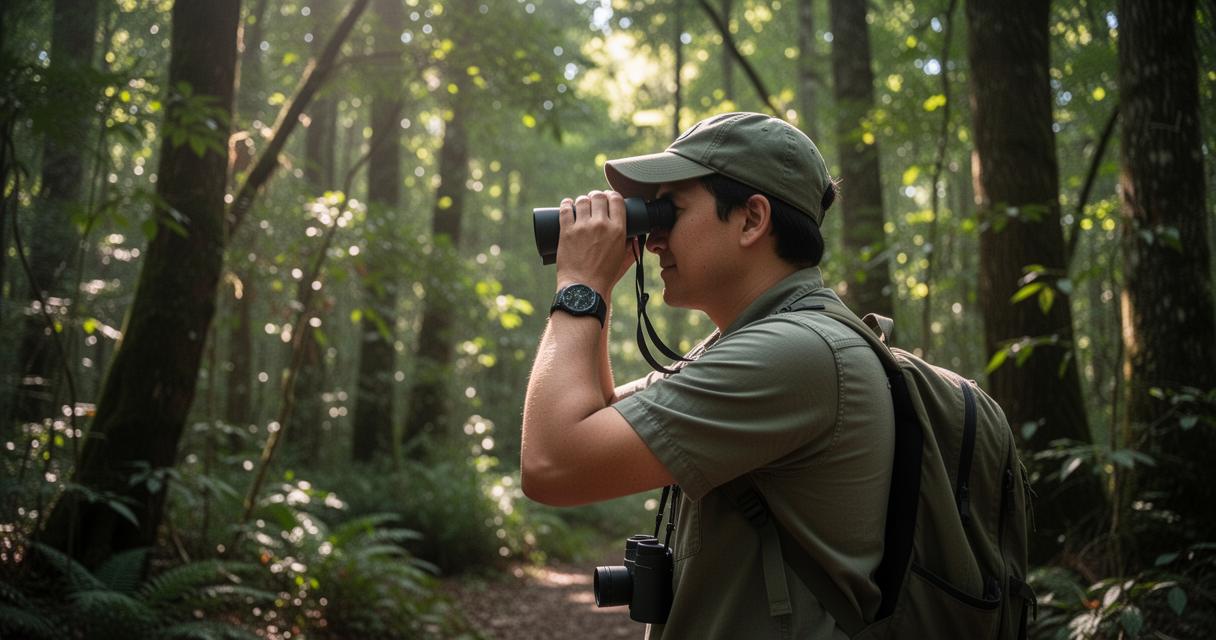
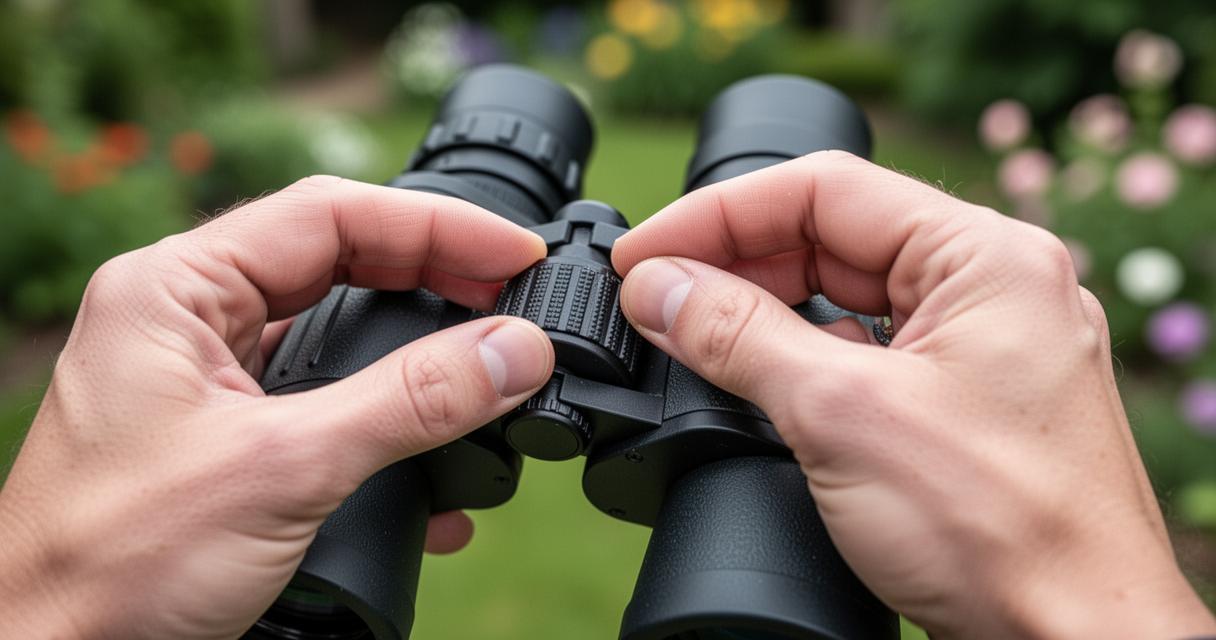
The central focus knob is the large wheel typically positioned between the two barrels, and it controls the focus for both eyes simultaneously. To set it correctly, begin by closing or covering your right eye and looking through the left barrel only. Turn the central knob slowly until the image appears as crisp as possible. This initial step removes any ambiguity introduced by your dominant or stronger eye taking over. Once you are satisfied with the left-eye image, keep the knob in that position and move on to the dioptre correction.
Fine-Tuning the Right Eye Dioptre for Spectacle Wearers
The dioptre ring, usually found on the right eyepiece, allows you to compensate for the difference in vision between your two eyes. With the central knob locked in place, close your left eye and look through the right barrel, turning the dioptre ring until the image matches the sharpness you achieved on the left side. Once both eyes produce an equally focused image, note the dioptre setting — many models have a numbered scale — so you can return to it quickly on future outings. For spectacle wearers, this adjustment is particularly important: if you choose to wear your glasses whilst using binoculars, ensure the eyecups are folded down or retracted to bring your eyes closer to the eye lenses. This reduces the risk of a reduced field of view caused by excessive eye relief distance.
Optimising interpupillary distance and exit pupil alignment
Even with a perfectly focused image, a poorly set interpupillary distance can leave you with dark vignetting around the edges or the unsettling sensation of looking through two separate circles rather than a single unified field. Adjusting the barrel angle is a simple step that is frequently overlooked, yet it has an immediate impact on viewing comfort.
Adjusting the Pair Barrel Angle for Full Field Alignment
Most binoculars hinge in the centre, allowing you to pivot the two barrels closer together or further apart. This adjustment controls the interpupillary distance — the measurement between the centres of your pupils. To set it correctly, hold the binoculars up to your eyes and gently pivot the barrels until the two circular fields of view merge into one seamless image. If you see a figure-of-eight effect, the barrels are either too wide or too narrow. A correct setting feels immediately natural and reduces eye strain considerably during extended observation sessions, whether that is birdwatching at dawn or scanning star clusters on a nocturnal outing.
Positioning the Eye Lenses for Hiking and Stargazing
The exit pupil is the small disc of light visible at the eye lens when you hold the binoculars at arm’s length, and its diameter directly affects how well the instrument performs in different lighting conditions. A larger exit pupil is especially useful for astronomy and nocturnal observation, where the pupil of the eye dilates to gather more light. For daytime hiking in bright conditions, a smaller exit pupil causes no difficulty whatsoever. The key is to position your eye so that its pupil aligns precisely with the exit pupil of the eyepiece — even a few millimetres of misalignment can darken the image noticeably. Rubber eyecups and adjustable eye relief help considerably in finding and holding this optimal position consistently, whether you are stationary or on the move along a trail.
Proper Handling and Maintenance of Porro and Roof Prisms
The internal prisms — either the classic porro prism configuration with its distinctive offset barrel design, or the more compact roof prism layout — are among the most delicate components in any binocular. They require thoughtful handling and regular but careful maintenance to preserve image quality over the long term.

Cleaning Dirt and Moisture off Lenses Safely
Dust, fingerprints and moisture are the most frequent enemies of optical clarity. Before reaching for any cloth, always use a soft brush or a blower to dislodge loose particles from the lens surface — rubbing a grain of grit across a coated lens can cause permanent scratches. Once the surface is free of abrasive debris, use a dedicated optical microfibre cloth, working in gentle circular motions from the centre outwards. Avoid household cloths, tissues or compressed air canisters at close range, all of which can damage the delicate anti-reflection coatings applied to the objective and eye lenses. If moisture has entered the barrels — a common issue during hiking in rainy conditions — remove the eyecups and allow the instrument to air dry in a warm, well-ventilated space before storing it.
Safe handling methods to protect delicate prism glass
Beyond cleaning, the way you handle your binoculars on a daily basis has a significant bearing on their longevity. Always use the neck strap or harness provided, and avoid resting the instrument on hard surfaces without its case or a padded surface beneath it. Porro prism binoculars, with their wider and more angular chassis, are generally more susceptible to misalignment if dropped, since the prisms are positioned further from the optical axis. Roof prism designs are more robust in this respect, though any sharp impact can still shift the collimation — the precise alignment between the left and right optical paths — resulting in a double image that is impossible to correct without professional servicing. When not in use, store your binoculars in a dry environment with the lens caps fitted, away from direct sunlight and temperature extremes. Following these straightforward habits will keep both the glass and the mechanical components in excellent condition for many years of rewarding observation.